Broad interpretation of the VAT Commissionaire Regime: Are you truly acting as an Intermediary?
Broad interpretation of the VAT Commissionaire Regime: Are you truly acting as an Intermediary?
The role of intermediaries in VAT has been under scrutiny for years, particularly due to the rise of digital platforms and sustainable business models. Recent judgments of the Court of Justice of the European Union (CJEU) indicate that the VAT commissionaire regime is being applied more broadly than in the past. As a result, intermediaries are increasingly treated as commissionaires for VAT purposes, which directly affects VAT liability, invoicing flows and VAT compliance obligations for all parties involved.
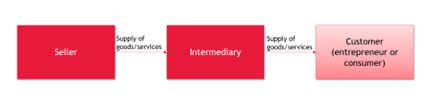
The consequence of the commissionaire regime is that it is not the actual supplier of the goods or services (the seller) but the intermediary who is deemed to make the supply to the end customer. As a result, the intermediary is liable for VAT on the full sales price, not just on its commission, and must issue an invoice to the customer.
The risk of overlooking the commissionaire regime is that it may quickly lead to underpaid VAT. The seller must also correctly invoice the commissionaire. For both parties, the regime carries significant implications that require careful attention to avoid VAT risks.
If you would like to understand what these developments mean for your organization, please contact one of our VAT specialists. We would be pleased to discuss the implications with you.
What the VAT commissionaire regime entails
Under this regime, a party acting in its own name but on behalf of another person is deemed for VAT purposes to both supply and receive the goods or services. This creates a fictitious chain of supplies, typically structured as follows:The consequence of the commissionaire regime is that it is not the actual supplier of the goods or services (the seller) but the intermediary who is deemed to make the supply to the end customer. As a result, the intermediary is liable for VAT on the full sales price, not just on its commission, and must issue an invoice to the customer.
The risk of overlooking the commissionaire regime is that it may quickly lead to underpaid VAT. The seller must also correctly invoice the commissionaire. For both parties, the regime carries significant implications that require careful attention to avoid VAT risks.
Broader interpretation under recent case law
Recent case law shows that the CJEU applies a broad substance-over-form interpretation of the VAT commissionaire regime. The Court places less weight on formalities, such as whose name appears on the invoice or whether the customer is informed of the true supplier, and focuses instead on the intermediary’s actual involvement and authority. Where an intermediary determines essential elements of the transaction (such as pricing, payment terms or access to the service), it will be regarded as acting as a commissionaire, according to this case law.Why this matters
Because of this broader interpretation of the VAT commissionaire regime, arrangements previously viewed as intermediation or facilitation may now fall within the scope of the regime. This may lead to:- a different VAT position (acting as a supplier rather than an intermediary);
- different invoicing obligations;
- implications for the place of supply (i.e., where VAT is due);
- additional VAT registration and filing obligations, both domestic and cross border; and
- potential VAT risks for prior periods.
What can you do?
Given the broader interpretation of the VAT commissionaire regime, affected businesses may wish to (re)assess their VAT position and:- Re analyse their business model;
- Critically review contracts and general terms and conditions;
- Map out the practical VAT implications; and
- Assess whether adjustments are required to contracts, terms and conditions, invoicing, the ERP system and VAT compliance processes.
How BDO can help
BDO has dedicated VAT specialists who have deep experience with the VAT commissionaire regime. We combine in depth legal knowledge with practical sector-specific insight.If you would like to understand what these developments mean for your organization, please contact one of our VAT specialists. We would be pleased to discuss the implications with you.